
Share Claudia Alta "Lady Bird" Johnson's obituary with others.
Invite friends and family to read the obituary and add memories.
Stay updated
We'll notify you when service details or new memories are added.
You're now following this obituary
We'll email you when there are updates.
Select your format and elements to print

IN LOVING MEMORY OF Claudia Alta "Lady Bird" Johnson
Claudia Alta
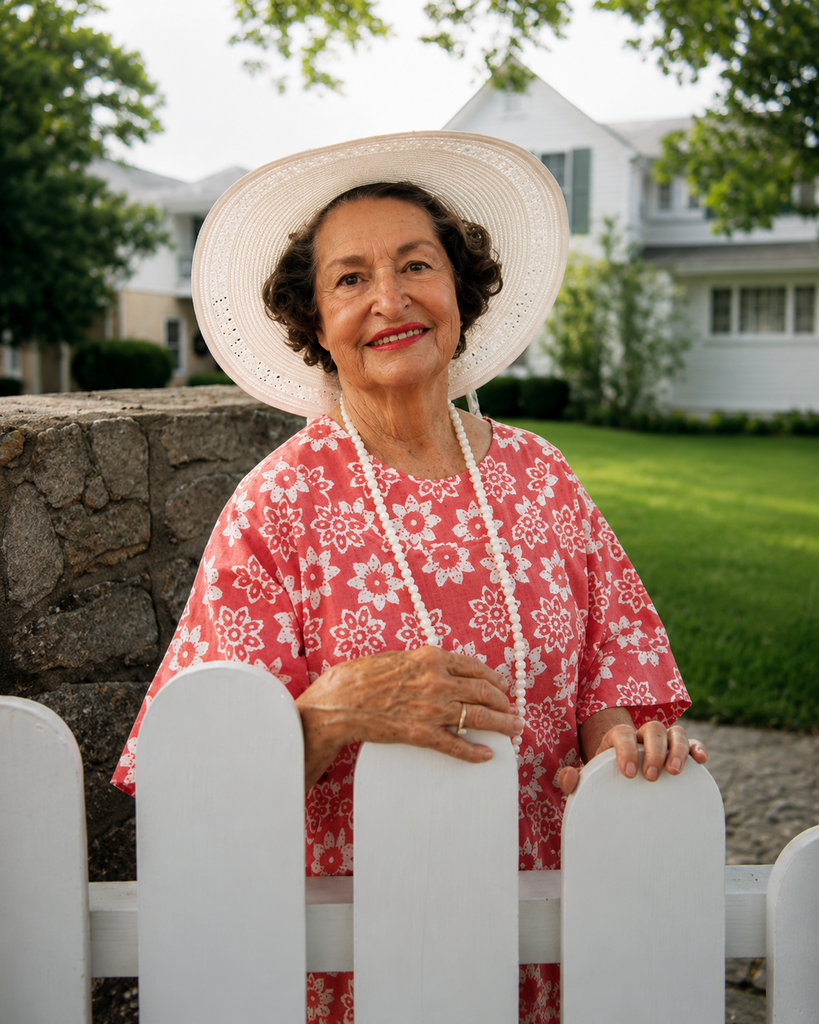
Johnson
Dec 22, 1931 — Aug 9, 2026
Claudia Alta "Lady Bird" Johnson's Obituary
Claudia Alta “Lady Bird” Johnson
December 22, 1931 – August 9, 2026
Claudia Alta “Lady Bird” Johnson, 94, former First Lady of the United States, conservationist, businesswoman, author, and lifelong champion of the Texas landscape, passed away peacefully on Sunday, August 9, 2026, at her home in Dallas, Texas. She was surrounded by her daughters and other members of her family.
Lady Bird was born on December 22, 1931, near Karnack in Harrison County, Texas, to Thomas Jefferson Taylor and Minnie Lee Pattillo Taylor. She spent her childhood among the pine forests, fields, bayous, and wildflowers of East Texas; surroundings that helped shape a lifelong appreciation for the natural world.
Her unusual nickname arrived early. A childhood caregiver remarked that the little girl was as pretty as a lady bird, and the name remained with her for the rest of her life. Her family often shortened it further: her father and brothers called her “Lady,” while her future husband would affectionately call her “Bird.”
Lady Bird lost her mother when she was very young and was raised in part with the help of her maternal aunt, Effie Pattillo. Thoughtful, observant, and somewhat shy as a girl, she developed an early love of reading and the outdoors.
After graduating from Marshall High School, Lady Bird attended St. Mary’s Episcopal School for Girls in Dallas before continuing her education at the University of Texas at Austin. She earned a Bachelor of Arts degree in history with honors followed by a degree in journalism, graduating with distinction. She also earned a teaching certificate and initially imagined a life spent in journalism or education.
Her plans changed after a mutual friend introduced her to an ambitious young congressional aide named Lyndon Baines Johnson.
Lyndon proposed almost immediately. Lady Bird, considerably more cautious by nature, required some convincing. His persistence eventually prevailed, and the couple married at St. Mark’s Episcopal Church in San Antonio. Their marriage became a partnership that would span decades of extraordinary change in both their own lives and the life of the nation.
When Lyndon decided to seek public office, Lady Bird used part of an inheritance from her mother to help finance his first congressional campaign. She became an indispensable partner in his political career, managing responsibilities at home and in Washington and, during his military service, helping oversee his congressional office in his absence.
Lady Bird also proved to be a remarkably capable businesswoman in her own right.
She purchased the struggling Austin radio station KTBC and devoted herself to learning the business, improving its operations, expanding its reach, and eventually building the investment into a successful radio and television enterprise. What began as a modest station became an important component of the Johnson family's financial success and demonstrated Lady Bird's determination, attention to detail, and business judgment.
Together, Lady Bird and Lyndon welcomed two daughters, Lynda Bird Johnson Robb and Luci Baines Johnson, who remained at the center of their parents’ lives even as public responsibilities increasingly carried the family into the national spotlight.
As Lyndon’s political career advanced from Congress to the United States Senate and eventually to the vice presidency, Lady Bird became an increasingly visible public figure herself. During a presidential campaign, she traveled extensively on behalf of the ticket and proved to be an effective speaker and campaigner despite the natural shyness she had worked to overcome since childhood.
Lady Bird was beside her husband in Dallas on the day President John F. Kennedy was assassinated. Only hours later, she witnessed Lyndon B. Johnson take the oath of office aboard Air Force One, suddenly placing their family at the center of one of the most difficult transitions in American history.
As First Lady of the United States, Lady Bird transformed what might easily have been viewed as a ceremonial role into one of active public service.
Her name became inseparable from conservation, environmental stewardship, and the beautification of American cities and highways. Yet to Lady Bird, “beautification” meant much more than flowers. She believed the surroundings people inherited and created—parks, neighborhoods, roadsides, waterways, historic places, and wilderness—affected the quality of human life itself.
She worked to improve Washington, D.C., encouraged the restoration of neglected public spaces, promoted the planting and preservation of native vegetation, and advocated for cleaner and more beautiful communities throughout the country.
Her efforts were instrumental in building public support for the Highway Beautification Act, popularly known as “Lady Bird’s Bill,” which addressed excessive roadside advertising, junkyards, and the preservation and enhancement of America's highway landscapes.
Lady Bird also traveled throughout the country drawing attention to parks, wilderness areas, scenic landscapes, and historic sites. She advocated for the preservation of wildflowers and native plants and lent her voice to broader conservation efforts that helped protect some of the nation's most treasured natural places.
Politics occasionally required courage of a different kind.
During a presidential election campaign, Lady Bird boarded a train that became known as the Lady Bird Special and traveled through eight Southern states at a time of intense division over civil rights. At stops along the way, she faced both supporters and hostile crowds while defending her husband's administration and encouraging Americans to move forward together. The journey became the first whistle-stop campaign tour undertaken independently by a First Lady.
She was also a strong supporter of Head Start and other initiatives designed to improve opportunities for children and families living in poverty.
After leaving the White House, Lady Bird returned to Texas with Lyndon and continued a lifetime of public service. Following her husband's death, she devoted herself to preserving his legacy through the Lyndon Baines Johnson Presidential Library while continuing to pursue causes that were distinctly her own.
She played a significant role in transforming Austin's neglected riverfront into a place where people could walk, exercise, gather, and enjoy nature. The lake through downtown Austin would eventually bear her name in recognition of those efforts.
Lady Bird also served as a member of the University of Texas System Board of Regents, maintaining a close relationship with the university that had helped shape her own life.
Perhaps no undertaking expressed her personal passions more completely than the creation of the National Wildflower Research Center, which she founded with actress Helen Hayes. The organization grew into what became the Lady Bird Johnson Wildflower Center, dedicated to native plants, ecological preservation, research, and the responsible stewardship of the natural world.
For her lifetime of public service, Lady Bird received numerous honors, including the Presidential Medal of Freedom, the nation's highest civilian honor, and the Congressional Gold Medal. She was also inducted into the Texas Women's Hall of Fame.
Those honors reflected an extraordinary public life, but her family knew another Lady Bird: a devoted wife, mother, grandmother, and great-grandmother who cherished conversation, family gatherings, Texas landscapes, books, flowers, and long drives through the countryside.
Lady Bird is survived by her daughters, Lynda Bird Johnson Robb and Luci Baines Johnson; her grandchildren and great-grandchildren; extended family members; and countless friends, colleagues, conservationists, and admirers whose lives and communities were touched by her work.
She was preceded in death by her beloved husband, Lyndon Baines Johnson; her parents, Thomas Jefferson Taylor and Minnie Lee Pattillo Taylor; her brothers; and other cherished members of her family.
Lady Bird's legacy can be seen in places both grand and ordinary: in national parks and neighborhood trails, along highways softened by native wildflowers, beside restored waterways, and anywhere someone chooses to preserve a beautiful piece of the natural world for the generation that follows.
She believed beauty offered more than decoration. It offered dignity, belonging, renewal, and hope.
And Texas, the place that first taught her to love the land, remained home until the end.
A funeral service celebrating Lady Bird's life will be held at 11:00 a.m. on Thursday, August 13, 2026, at Bent Tree Bible Church in Carrollton, Texas.
In lieu of flowers, the family asks that those wishing to honor Lady Bird consider planting native Texas wildflowers, supporting conservation efforts in their own communities, or making a memorial contribution to an organization dedicated to preserving native plants and natural spaces for future generations.
Claudia Alta "Lady Bird" Johnson's Guestbook
Visits: 9
This site is protected by reCAPTCHA and the
Google Privacy Policy and Terms of Service apply.
Service map data © OpenStreetMap contributors